
Turning Research into Art: Visual Thinking for Researchers
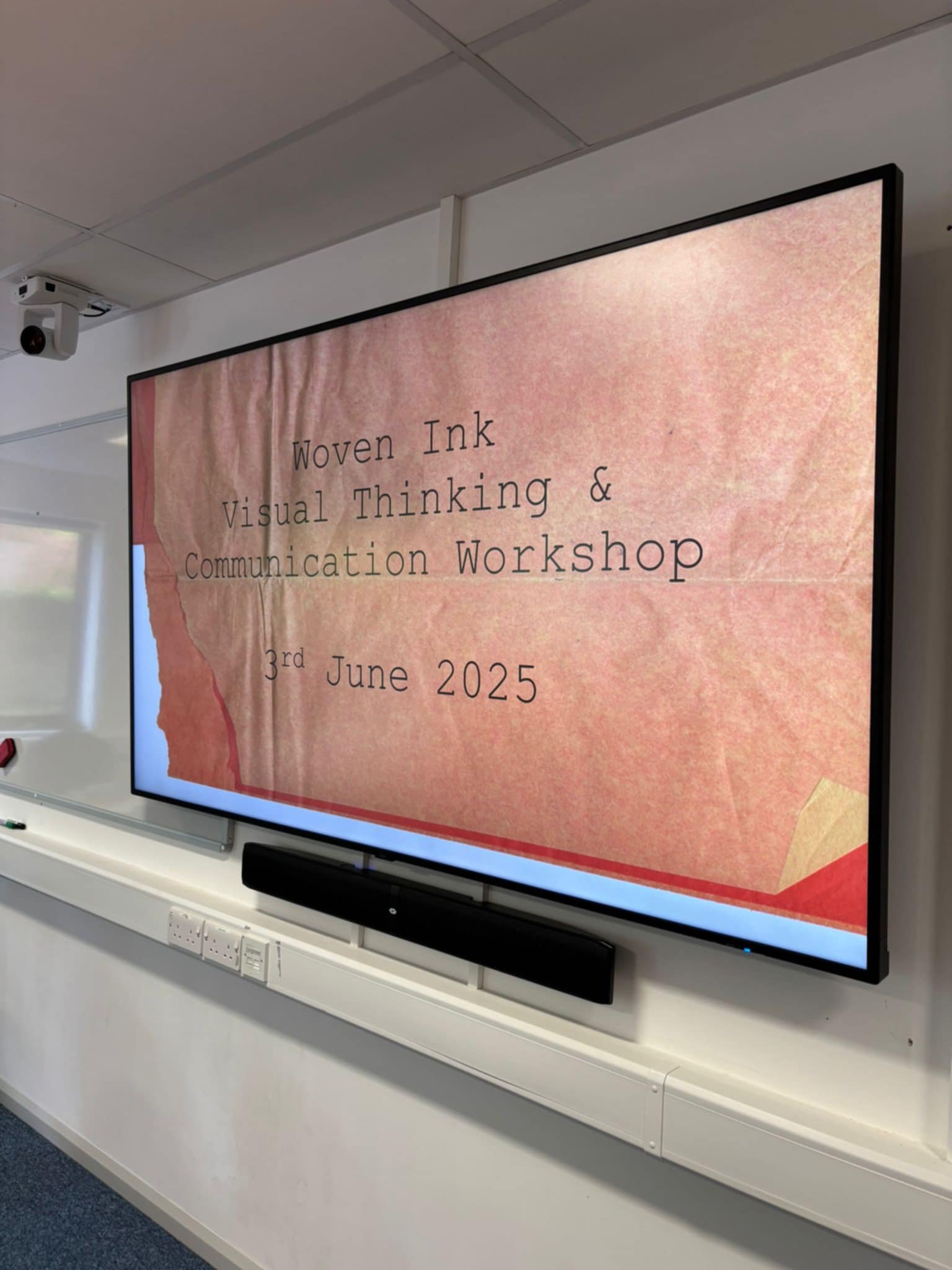
In 2025 we were invited by the University of Exeter to run our Visual Thinking and Communication workshop with postgraduate and early-career researchers. This hands-on workshop was designed to help researchers transform complex ideas into clear, engaging visual stories.
CREDITS
Workshop Facilitators Isolde Godfrey & Jess Harvey
“one of the best workshops I have ever done”
“TURNING RESEARCH INTO ART: VISUAL THINKING FOR RESEARCHERS
In academia, we often spend years crafting our research carefully selecting every word for papers, presentations, and proposals. When it comes to communicating our research to the wider world—whether funders, policymakers, or the public—words alone are sometimes not enough. In recent years, funders and journals are increasingly asking researchers to present their findings visually—through graphical abstracts, infographics, and even animations. Visual communication can break down barriers of language, discipline, and accessibility, helping to bring research to life for wider audiences.
Despite this increasing requirement, visual thinking is rarely taught as part of academic training. Researchers are often left to figure it out alone, with little guidance or support. We wanted to demystify visual communication and empower researchers to begin experimenting with new ways of sharing their work. That’s exactly why we organised “A picture says a thousand words – How to turn research into accessible art,” a half-day, hands-on workshop designed to help early career researchers (ECRs) and postgraduate researchers (PGRs) build practical skills in visual communication. Led by the talented team – Jess Harvey and Isolde Godfrey – at Woven Ink, who specialise in transforming research and ideas into visual stories, this session offered attendees the chance to dip their toes into the world of graphic abstracts, visual notes, and creative dissemination.
INSIDE THE WORKSHOP: FROM THEORY TO PRACTICE
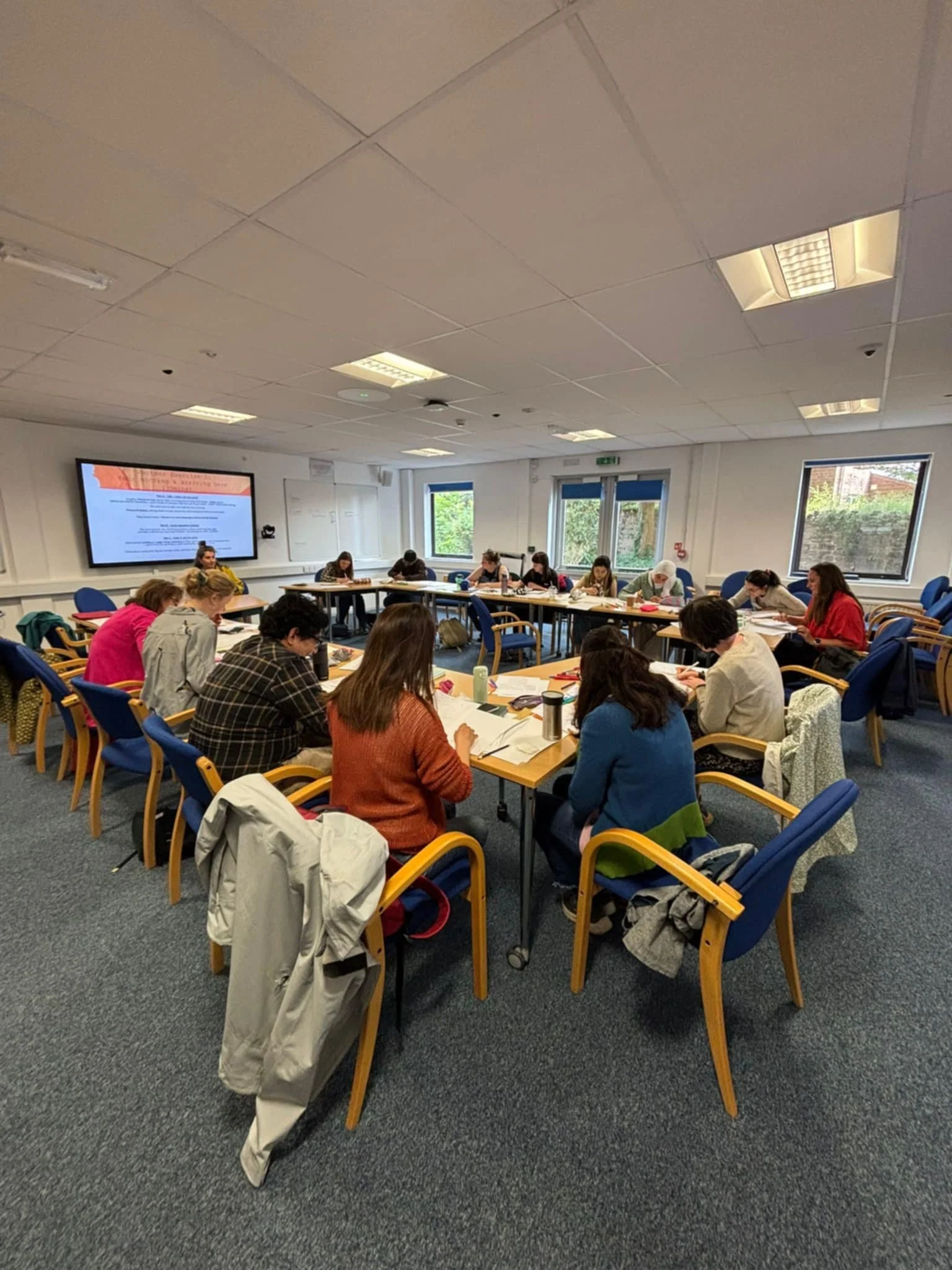
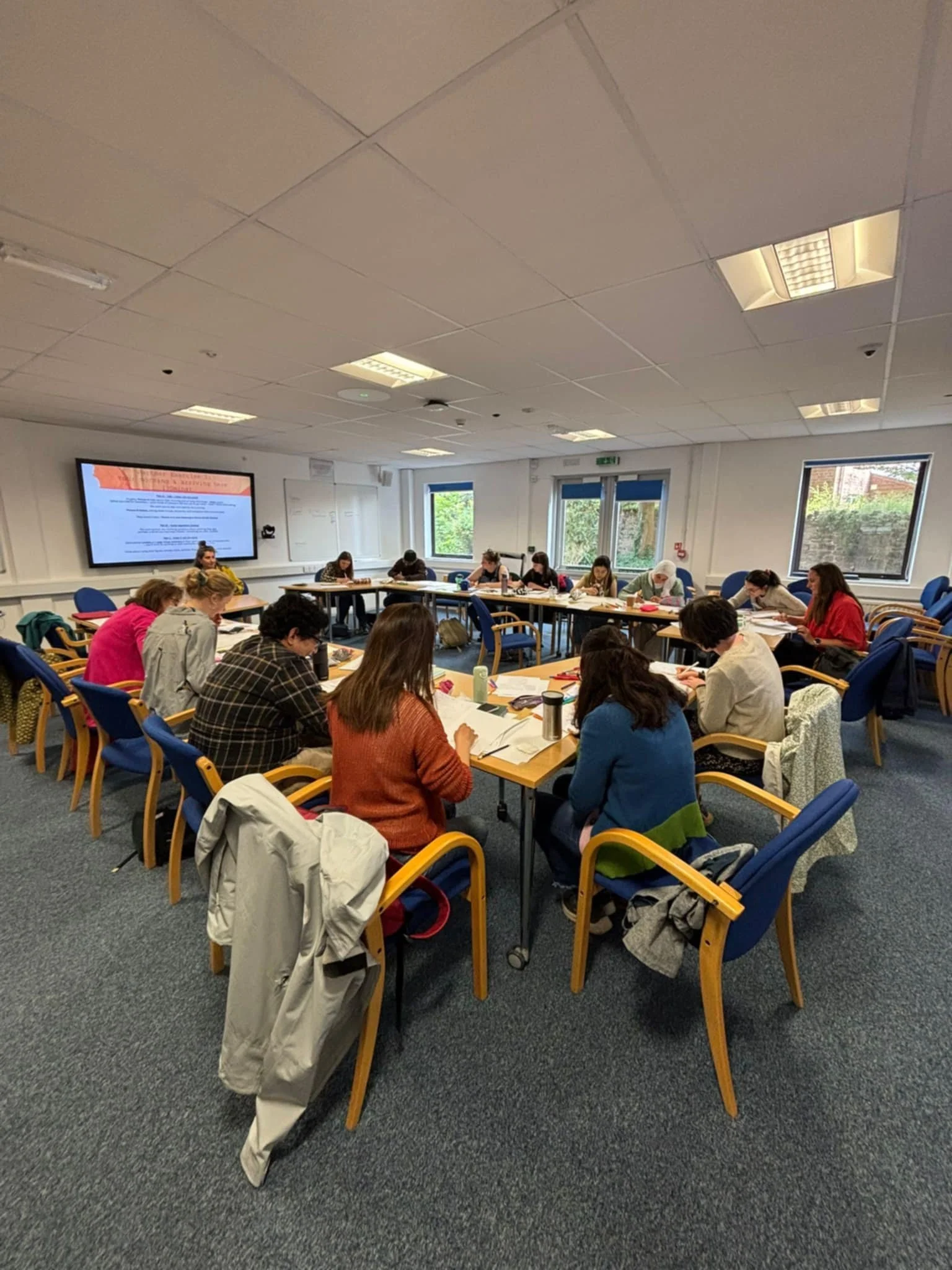
Our in-person workshop brought together 24 researchers, mostly PhD students, from all three faculties and 15 departments from Law to Mathematics and Engineering, all sharing a common goal: to communicate their research more effectively.
The session began with a theoretical overview led by Woven Ink, who introduced the principles of visual thinking. Through inspiring examples of their work—ranging from graphic summaries of complex medical research to playful illustrations of social science concepts—the team showed how even the most technical subjects can be transformed into engaging visuals.
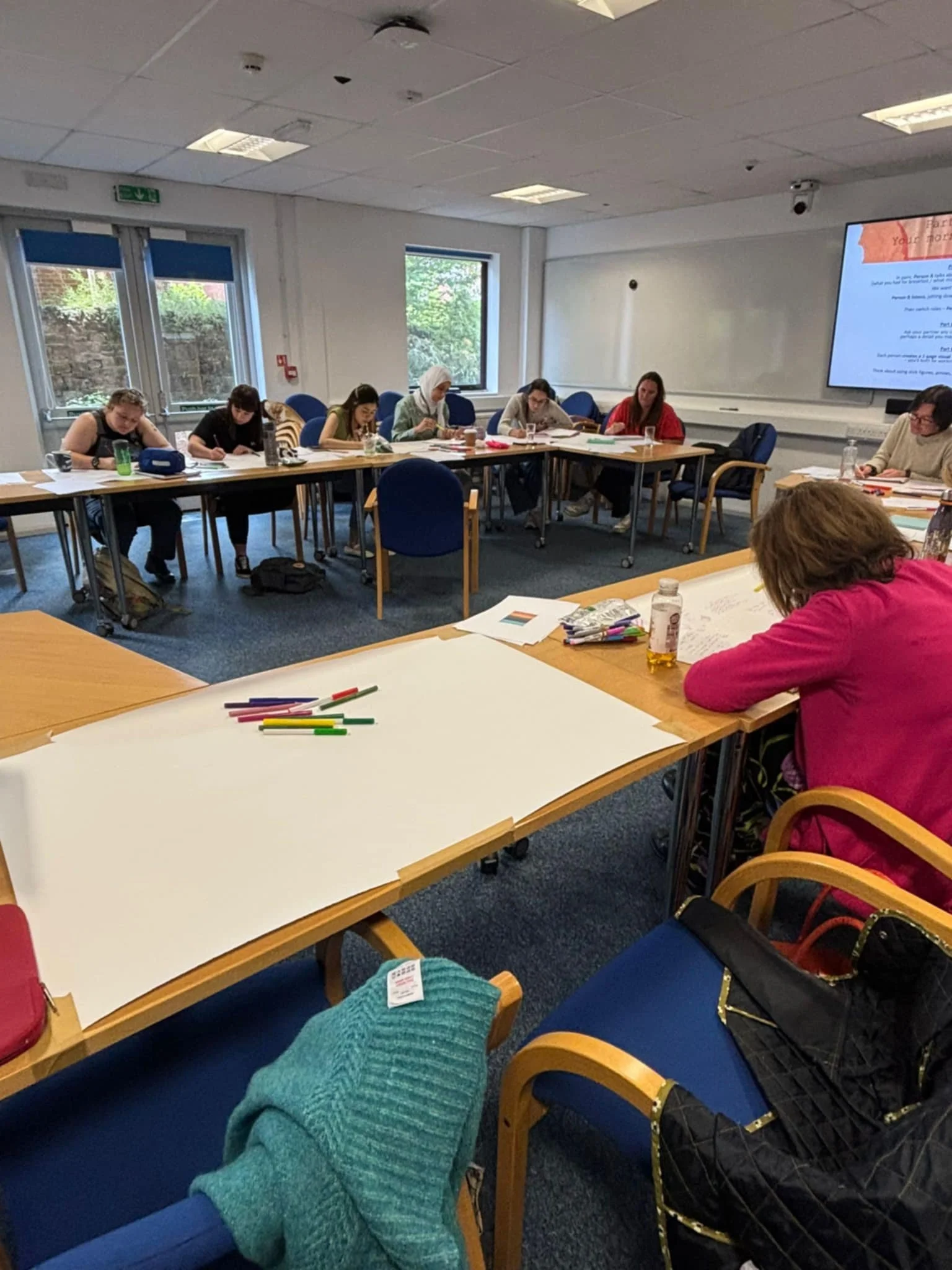
This session wasn’t just a lecture—it was a practical, hands-on session. Attendees were invited to bring a piece of their own work, whether a recent paper, a research question, or even just an idea. Using nothing more than paper, pens, and flip charts (no fancy software required), participants rolled up their sleeves and began the process of visualising their research.
Woven Ink was on hand throughout, offering expert advice on everything from selecting the right imagery to refining key messages. Crucially, the session also included time for peer-engagement, allowing participants to share ideas, troubleshoot challenges, and learn from each other.
The atmosphere was creative, collaborative, and above all, encouraging. Many participants expressed surprise at how accessible visual thinking felt once they had the space—and permission—to experiment.
LESSONS LEARNED: THE POWER OF SPACE AND SUPPORT
One of the key takeaways from this event was the value of dedicated time and physical space for creative thinking. The workshop was deliberately structured to offer plenty of room—literally and figuratively—for participants to think differently. Horseshoe table design, flip charts, and physical drawing materials allowed for a tactile, interactive experience that is often missing in digital or remote settings.
The feedback we received highlighted just how rare and valuable this opportunity was. In the busy world of research, we rarely give ourselves permission to step away from the keyboard and approach our work from a fresh angle. This workshop showed that with the right guidance and a supportive environment, researchers are more than capable of thinking—and communicating—visually.
FINAL THOUGHTS
Research is about more than just generating knowledge—it’s about sharing that knowledge in ways that inspire, inform, and make a difference. Visual communication isn’t just a “nice to have”—it’s an essential skill for researchers in the 21st century as it also contributes to open science practices by facilitating accessible research.
Our workshop with Woven Ink was a small but meaningful step in helping our community move towards more engaging, accessible, and impactful communication. We look forward to seeing how these visual skills continue to grow, evolve, and shape the way we tell the stories of our research. Our hope is that this event marks the beginning of a new “visual thinking” culture within our research community.”